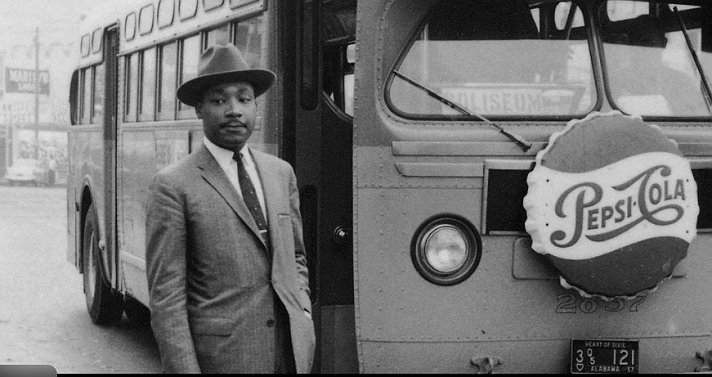






One of the most well-known true stories in Black American history is that of Rosa Parks and the moment that helped spark the Montgomery Bus Boycott. In 1955, in Montgomery, Alabama, Rosa Parks was riding a segregated city bus after a long day of work as a seamstress. At the time, segregation laws in the American South required Black passengers to give up their seats to white passengers when the bus became crowded. Parks was seated in the “colored section” when the driver instructed her and others in her row to move. She refused—not out of sudden defiance, but out of exhaustion from years of daily injustice and a firm belief that she deserved dignity and equal treatment.
Her refusal led to her arrest, but what happened next was far bigger than a single moment on a bus. The Black community in Montgomery organized a citywide boycott of the bus system, meaning thousands of Black residents refused to ride buses for over a year. Instead, they walked long distances, carpooled, and relied on one another for transportation. This act of collective resistance placed enormous economic pressure on the city’s transit system, since Black riders made up the majority of bus users. The boycott became one of the most powerful examples of coordinated, nonviolent protest in American history, showing how everyday people could challenge systemic injustice through unity and persistence.
During this period, leaders like Martin Luther King Jr. emerged as prominent voices advocating for nonviolent resistance and civil rights. But just as important were the ordinary people—domestic workers, students, laborers, and elders—who sustained the boycott day after day, often at great personal cost. Some lost jobs, others faced harassment, yet they continued because they understood the larger goal: dignity, equality, and justice. The boycott eventually led to a Supreme Court ruling that segregation on public buses was unconstitutional, marking a major victory in the Civil Rights Movement and showing how one act of quiet refusal could grow into a movement that reshaped history.
Her refusal led to her arrest, but what happened next was far bigger than a single moment on a bus. The Black community in Montgomery organized a citywide boycott of the bus system, meaning thousands of Black residents refused to ride buses for over a year. Instead, they walked long distances, carpooled, and relied on one another for transportation. This act of collective resistance placed enormous economic pressure on the city’s transit system, since Black riders made up the majority of bus users. The boycott became one of the most powerful examples of coordinated, nonviolent protest in American history, showing how everyday people could challenge systemic injustice through unity and persistence.
During this period, leaders like Martin Luther King Jr. emerged as prominent voices advocating for nonviolent resistance and civil rights. But just as important were the ordinary people—domestic workers, students, laborers, and elders—who sustained the boycott day after day, often at great personal cost. Some lost jobs, others faced harassment, yet they continued because they understood the larger goal: dignity, equality, and justice. The boycott eventually led to a Supreme Court ruling that segregation on public buses was unconstitutional, marking a major victory in the Civil Rights Movement and showing how one act of quiet refusal could grow into a movement that reshaped history.